

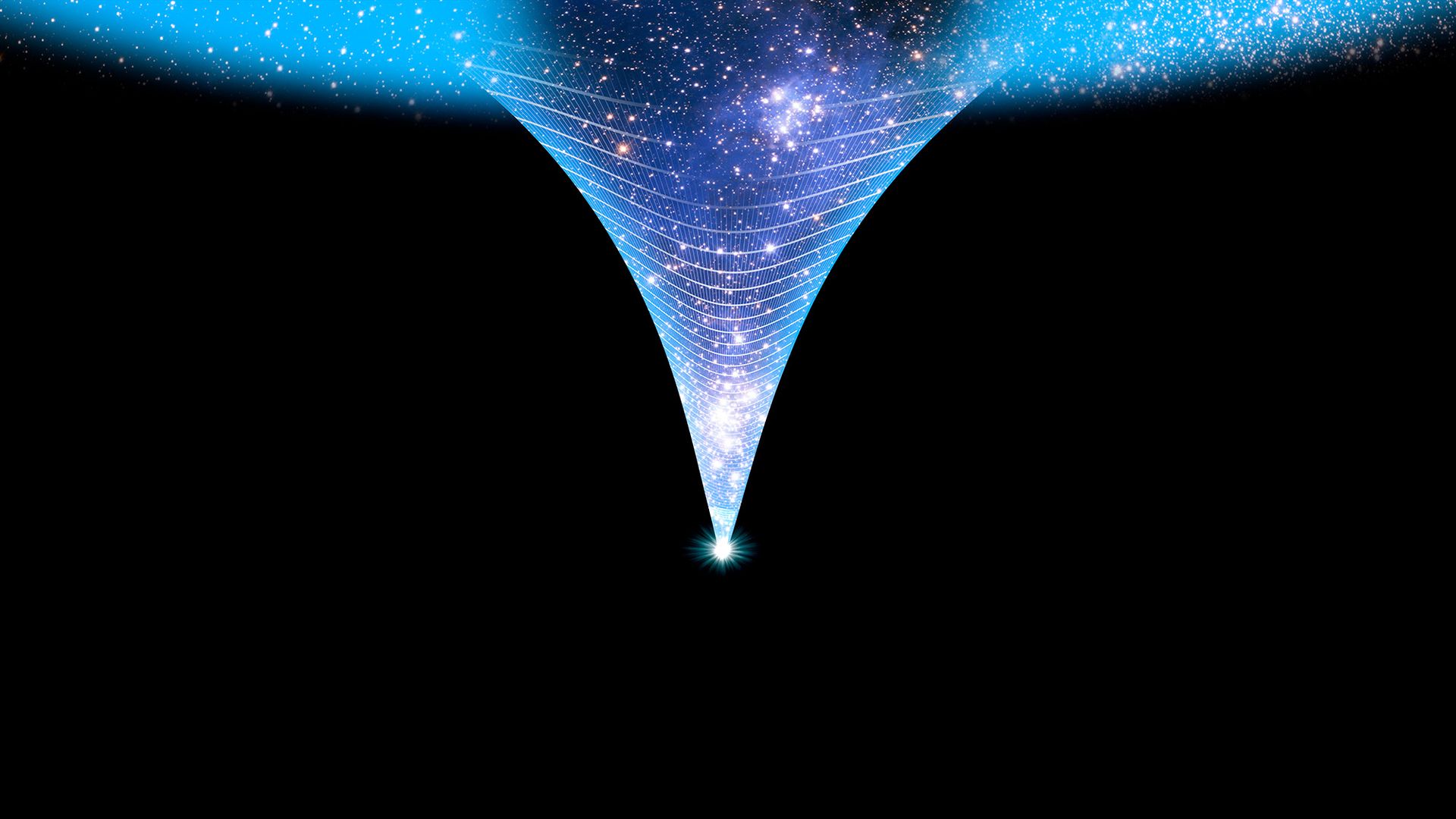
A neglected "ghost particle" may have dominated the universe right after the Big Bang — changing how the cosmos expanded in its first moments and reshaping the conditions under which matter won out over antimatter, a new study suggests. In other words, it may explain why anything exists at all.
The particle, a hypothetical "right-handed" neutrino, briefly could have held more energy than everything else in the infant universe combined, which would have sped up cosmic expansion and delayed key particle interactions, the study proposes. The research was published Sept. 8 in the journal Physical Review Letters.
Neutrinos are ghostly particles that rarely interact with anything. A typical neutrino from the sun could pass through a slab of lead a light-year thick — about 5.9 trillion miles (9.5 trillion kilometers) — before striking a single atom. Neutrinos come in three types, or "flavors," and switch between them as they travel, making use of a subtle quantum effect that works only if they have mass. Yet the Read Entire Article



 English (US)