

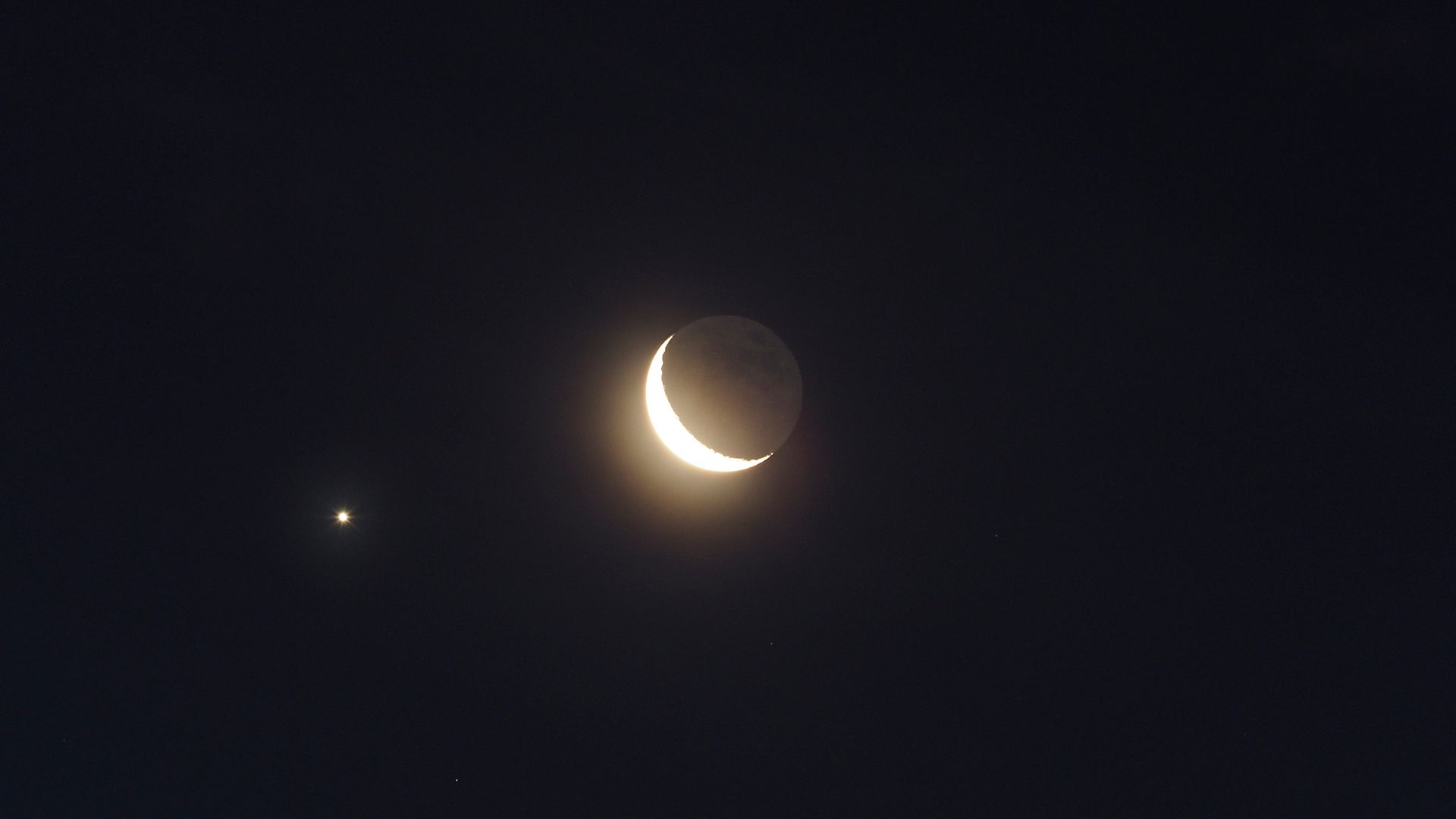
The moon may have formed in as few as five hours after the cataclysmic collision between Earth and a long-lost protoplanet, new simulations suggest. The surprising findings could help shed light on other historic impacts throughout our cosmic neighborhood and beyond.
Experts strongly suspect that the moon was created when a Mars-size space rock called Theia smashed into an early version of our planet, back when the solar system was young and extremely unstable. This colossal impact likely would have turned the once-neighboring worlds into spinning clumps of molten rock that eventually coalesced and cooled into the versions of Earth and the moon we see today. Without this collision, which also may have left chunks of Theia Read Entire Article


 English (US)