

The heart of the Milky Way may be more hospitable to water than astronomers thought.
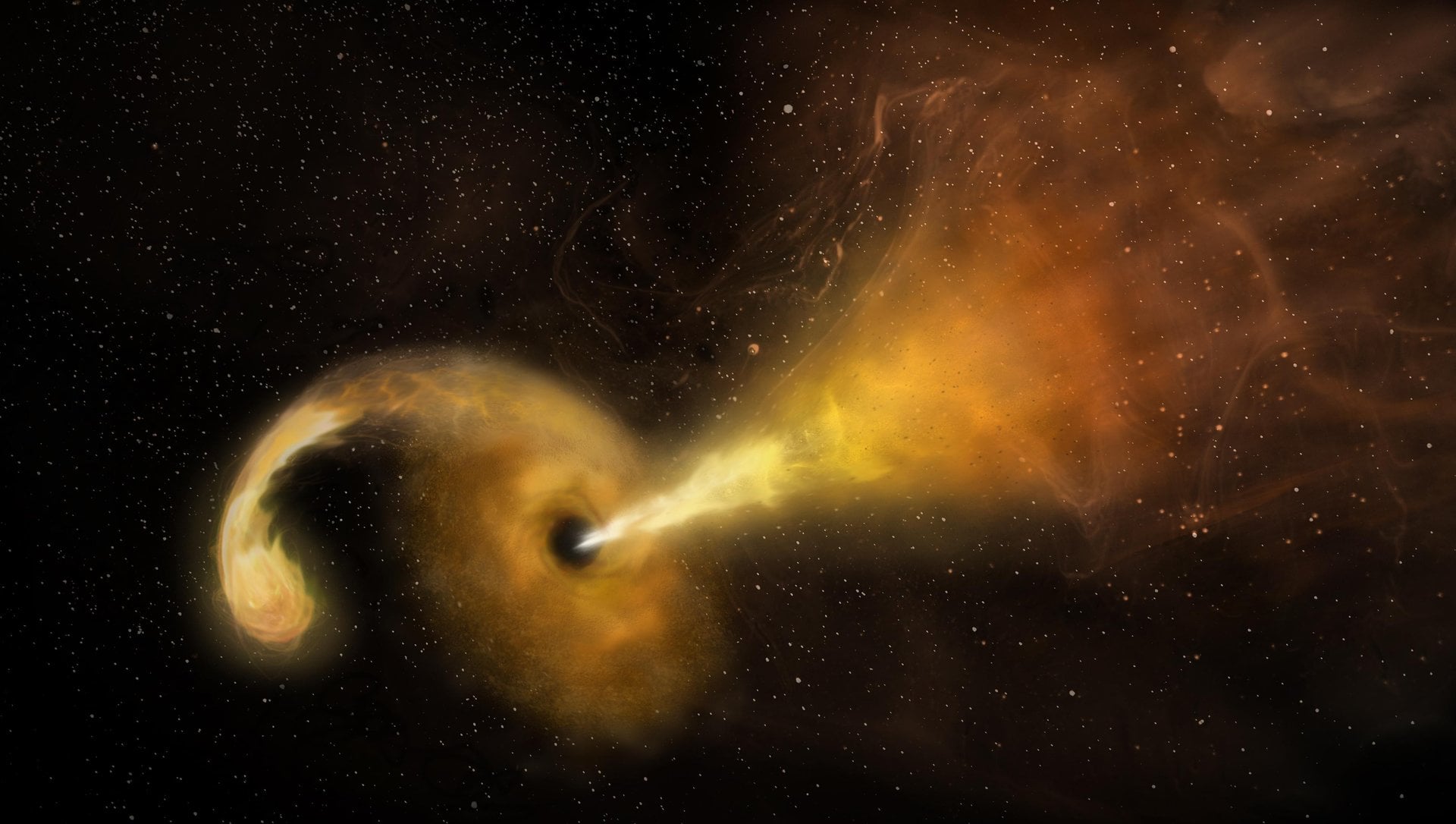
Using the James Webb Space Telescope (JWST), researchers detected water and cosmic dust around an aging star only 0.55 light-years from Sagittarius A* (Sgr A*), the supermassive black hole at the center of our galaxy.
The new study suggests that water and dust can form and survive surprisingly close to a supermassive black hole, where intense radiation and other harsh conditions might otherwise be expected to destroy them. The team used Webb's Mid-Infrared Instrument (MIRI) to study IRS 3, an aging star located in the crowded environment surrounding Sgr A*, which has a mass of about 4 million suns, according to a statement from the ...



 English (US)